
French Daycare Center in Madrid:
learning French from an early age
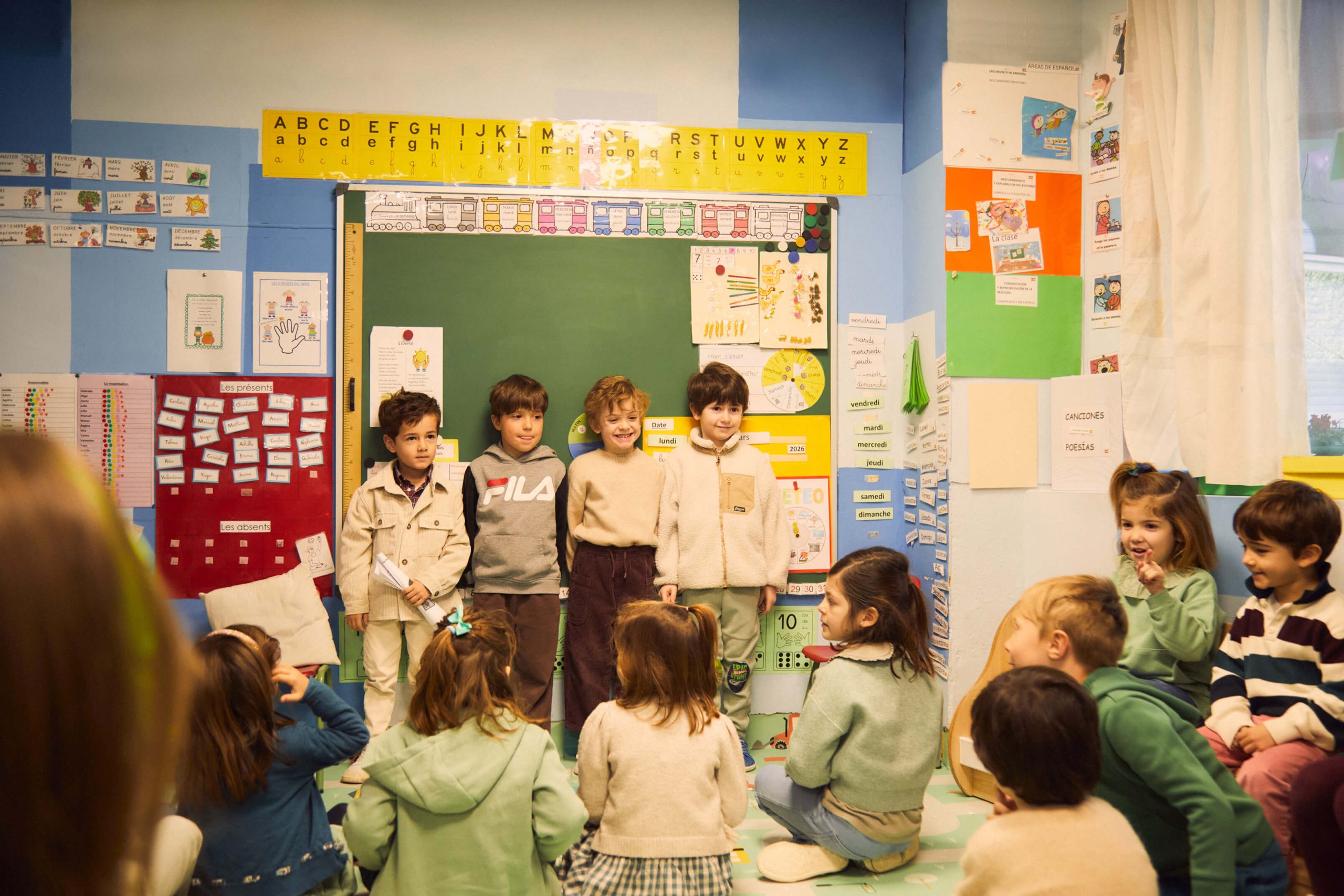
Every corner of our school is designed to foster independence, creativity, and social skills in a warm and stimulating environment.
Ages and Stages We Cover
Preschool
2 to 3 years
- Understands basic instructions in French and responds with gestures or single words.
- Practice songs, routines, and everyday phrases in French with natural pronunciation.
- He speaks Spanish fluently during free play and at mealtimes.
- Recognizes basic English vocabulary: colors, numbers, greetings, and animals.
Cross-section
Ages 3 to 4
- Form simple sentences in French to express needs, opinions, and emotions.
- Actively participate in assemblies, storytelling, and role-playing games in French.
- The introduction to reading and writing in Spanish begins with phonological awareness.
- Engage in simple exchanges in English with the native-speaking teacher: questions, answers, and games.
Senior Class
Ages 4 to 5
- He communicates fluently in French: he narrates, argues, and describes using a wide range of vocabulary.
- Formal instruction in reading and writing in French begins, in preparation for CP (elementary school).
- He reads and writes fluently in Spanish. He consciously distinguishes between the two languages.
- Understands and produces complete sentences in English. Participates in short plays and presentations.
Why Start Learning French at Age Two?
The most powerful window for language acquisition in a person’s life does not begin at age 3, when a child starts preschool; it begins earlier. Between the ages of 0 and 3, the brain possesses extraordinary phonological plasticity—the ability to capture and reproduce the sounds of any language with a native accent. After that age, this ability gradually and irreversibly declines.
Waiting until age 3 isn't a big deal. But starting at age 2 means entering the "petite section" with a one-year head start: with an ear attuned to French, with routines and vocabulary already internalized, and with an emotional connection to the language that makes learning feel natural rather than new.
The brain absorbs sound and prosodic patterns. Maximum sensitivity to the musicality of languages.
Implicit acquisition of vocabulary, sentence structures, and phonology. Native accent is established during this period.
Language development moves from comprehension to active production. The child begins to think, reason, and tell stories in French.
What a Day Is Like at Our French Daycare Center
The daily schedule at TPS is designed so that French is present at all times of the day—not just during "learning" times—because at age 2, there is no distinction between playing and learning. Everything is learning, and everything happens in French.
Routines
The school is accredited by the AEFE, which ensures continuity in any country with a French education system.
Games
The entire academic journey at a single school, from preschool through the Baccalauréat.
Habits
Ideal for expatriate families or those who may be transferred internationally in the medium term.
Languages
Decades of history in Madrid, with a large and active network of French and Franco-Spanish families.
Staff, ratios, and French-speaking teachers
At age 2, the quality of the social environment is everything. A small group is not merely an aesthetic consideration: it is the minimum requirement for a child to form a secure attachment with a primary caregiver, without which no real emotional or linguistic learning can take place.
Consistent stability
The same mentor for each grade level. Maintaining a consistent relationship with an adult is part of the method—not a coincidence.
Spaces, Facilities, and Safety
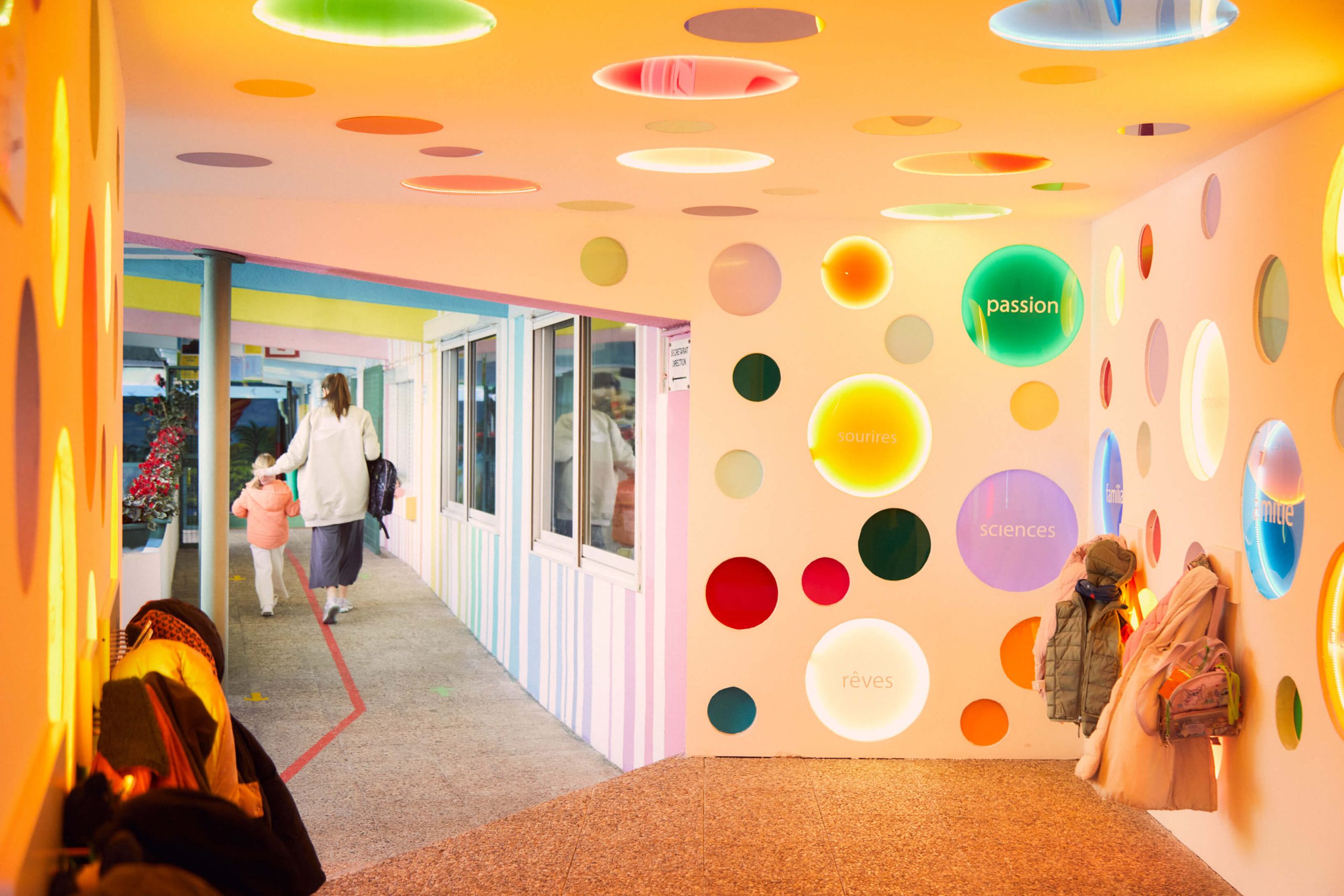
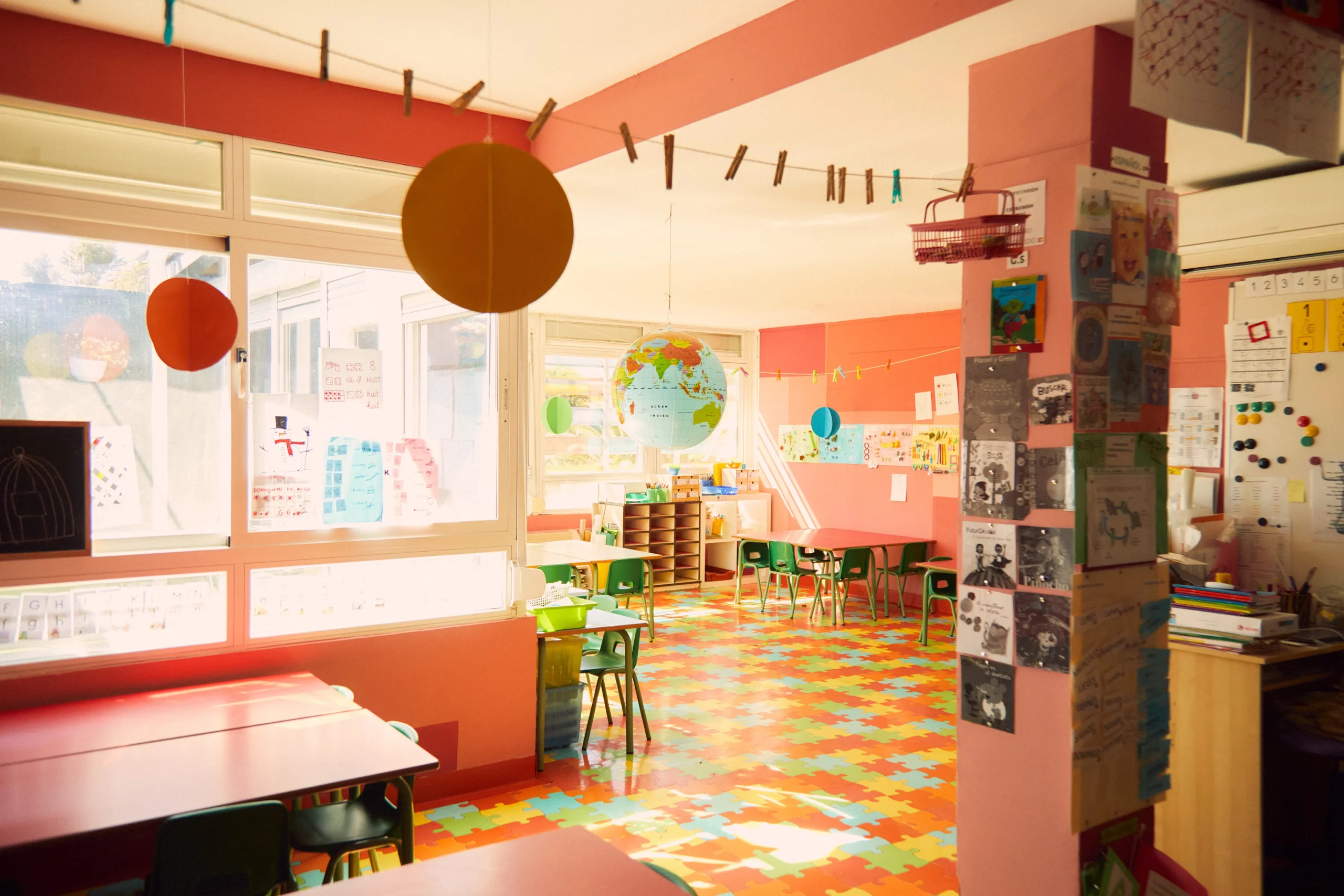
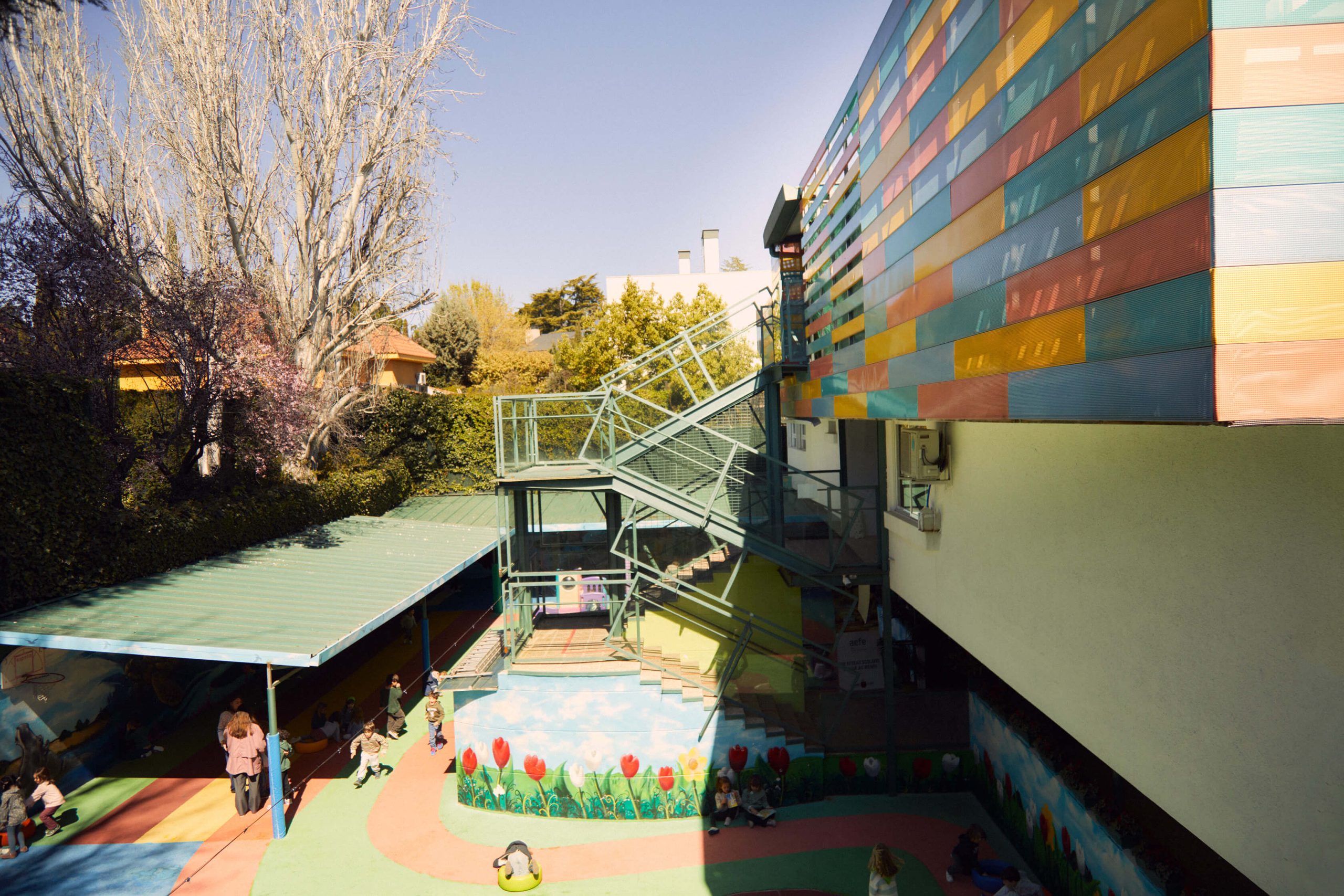
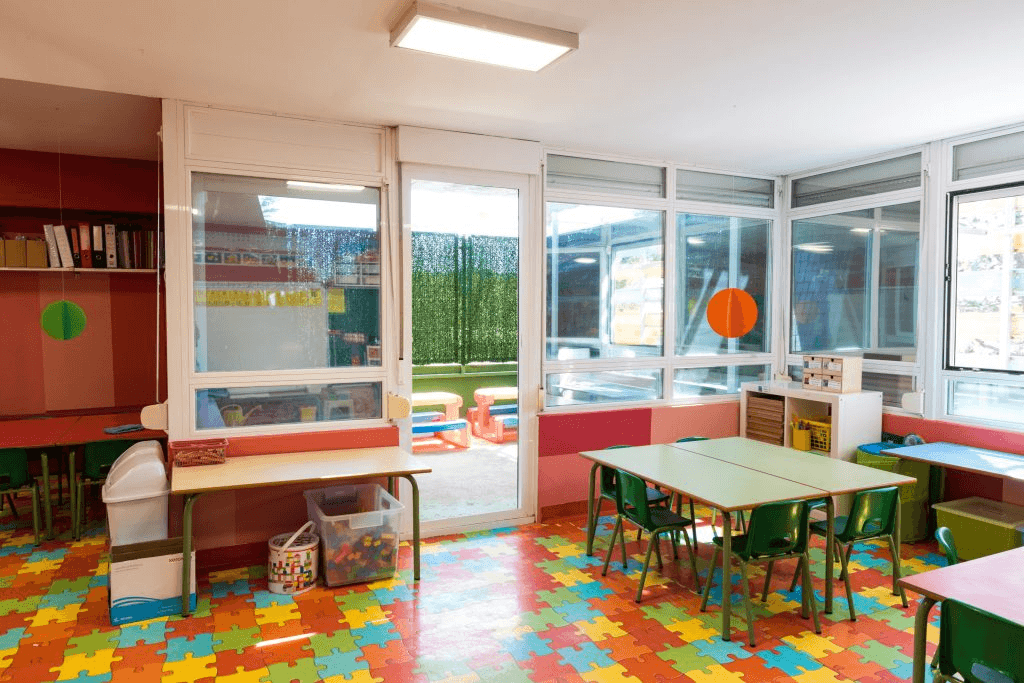
Facilities for 2-year-olds have very different requirements than those for elementary school students. Here, the spaces aren’t simply "smaller"—they’re designed from the ground up for the earliest stage of childhood, with safe materials, adapted heights, and distinct areas tailored to the type of activity and the child’s energy level.
Schedules, Cafeteria, and Services for Families
We know that choosing a daycare center is also a logistical decision. That’s why we’ve designed our services to meet the real needs of working families—not just the ideal school calendar.
*Extended hours available (lunch + after-school activities) until 4:30 p.m.
Why don't you come see us?
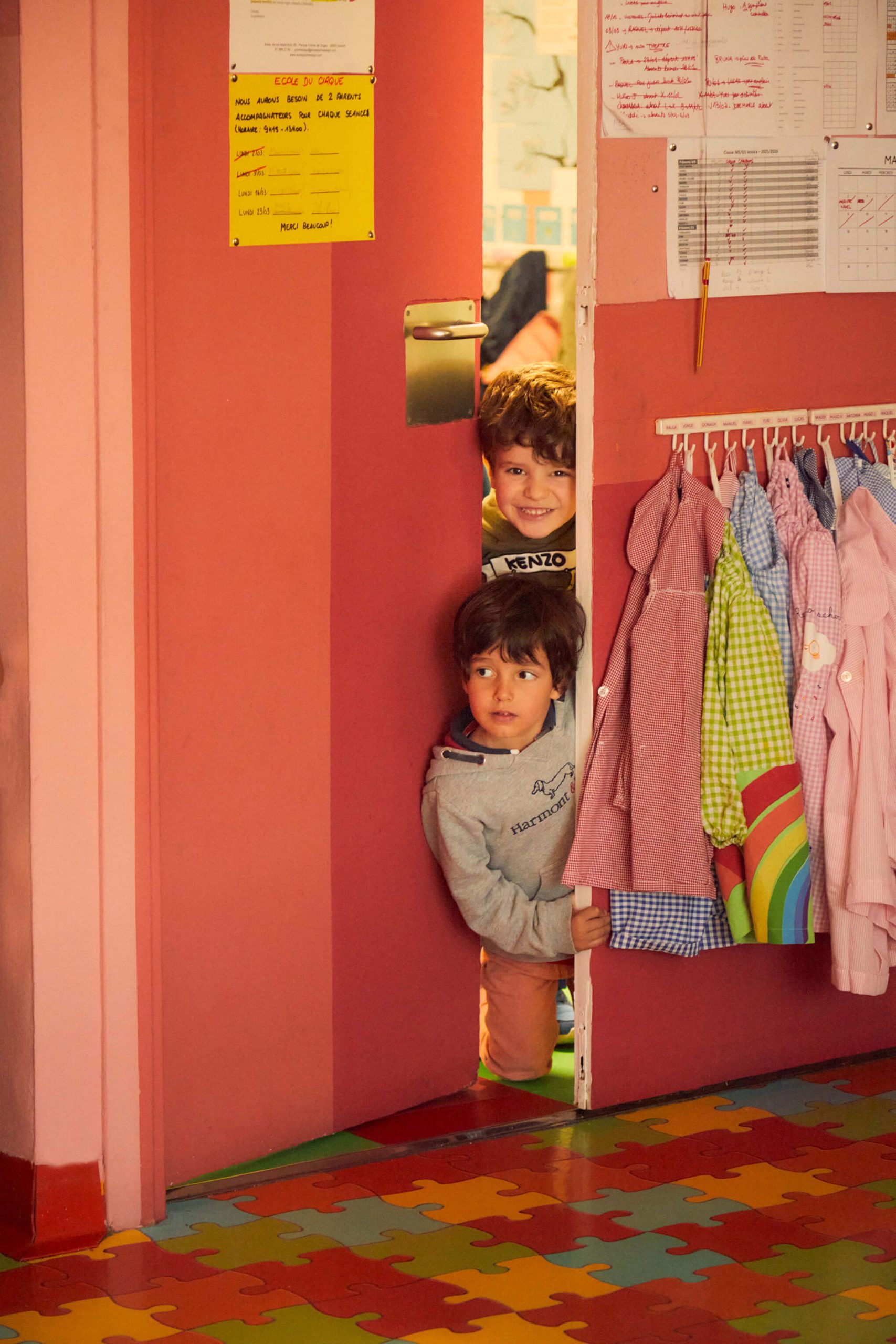
What better way to find out if the school is the right fit for your child than by coming to visit on a weekday, when you can see firsthand the magic that happens at the school.
Schedule a visit to the school